
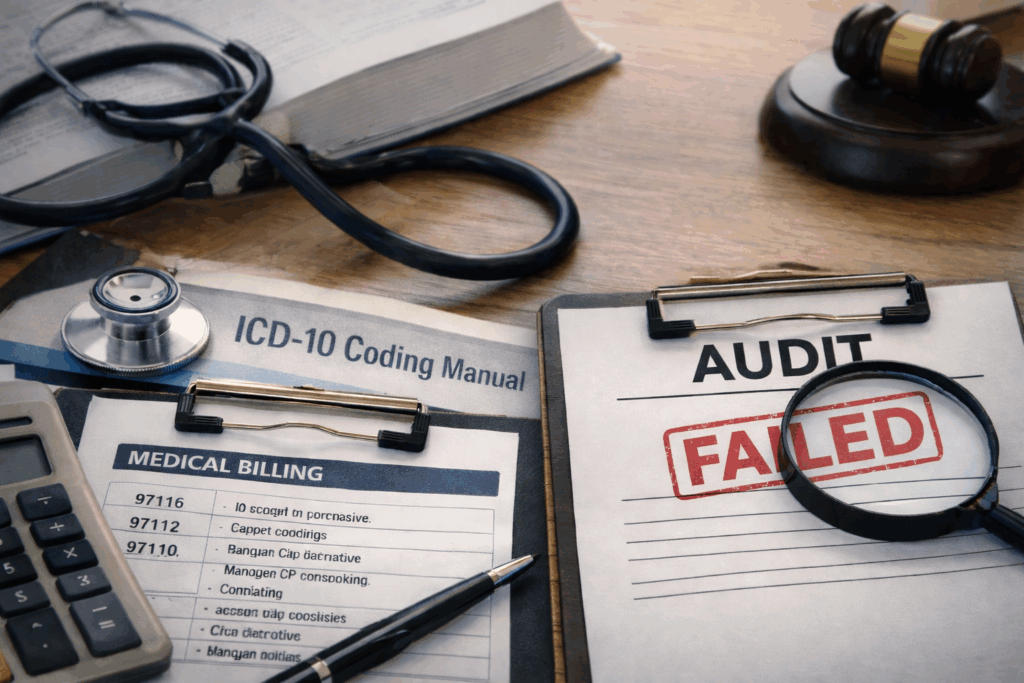
I’m increasingly seeing providers use codes for services that are not typically performed in acupuncture clinics. When questioned, the common response is:
“I’m getting paid, so it must be okay.”
Unfortunately, getting paid is not a guarantee that the coding is correct — and it certainly doesn’t protect you from an audit down the line.
Below are some of the codes I frequently see questioned in audits and compliance reviews.
CPT 97116 — Gait Training
Definition:
A therapeutic procedure (each 15 minutes) designed to improve walking ability, balance, and coordination.
Purpose:
To train patients in walking techniques to improve mobility, often following injuries, neurological conditions, or surgery.
Typical Activities Include:
- Parallel bar walking
- Treadmill walking
- Stair climbing
- Navigating obstacles
Documentation Must Show:
- Objective findings related to gait impairment
- Balance deficits
- Limitations in walking ability
Without documented gait dysfunction and measurable improvement goals, this code is not appropriate.
CPT 97112 — Neuromuscular Reeducation
Definition:
A skilled, one-on-one therapeutic procedure (each 15 minutes) focused on improving balance, coordination, posture, proprioception, and neuromuscular control.
Typical Activities Include:
- Balance and postural control exercises
- Stability training using foam pads or therapy balls
- Movement retraining after neurological injury (such as stroke or spinal cord injury)
- Muscle activation exercises for controlled movement
This code is primarily used when there is a neurological component requiring retraining of movement patterns.
CPT 97110 — Therapeutic Exercise
Definition:
Goal-directed exercises (each 15 minutes) to improve strength, endurance, range of motion, and flexibility.
Typical Activities Include:
- Active, passive, or assisted range of motion exercises
- Stretching to improve flexibility
- Core stabilization and strengthening
- Resistance training
A Critical Requirement for All Therapeutic Procedure Codes
Regardless of which therapeutic code is used, documentation must include:
- Specific functional goals in the treatment plan
- A clear connection between the intervention and those goals
- Evidence of how the service improves performance or function
Simply performing an activity — or receiving payment — does not make the code appropriate.
The Bottom Line
Coding should reflect the actual skilled service being performed, supported by:
- Appropriate patient condition
- Objective findings
- Functional goals
- Clear documentation
Relying on “it paid, so it must be okay” is one of the fastest ways to end up facing denials, recoupments, or audits.